Solo Play & Run Planning
Can You Play Gamble With Your Friends Solo? Solo Play Guide
Yes. The public Steam listing currently presents Gamble With Your Friends as a 1–6 player online co-op game, so a one-player run is within the listed range. This guide explains what solo changes, how to protect a run, and when the multiplayer guide is the better destination.
Yes—solo play is possible, with one important caveat
The short answer is yes: Steam currently lists Gamble With Your Friends for 1–6 players, so playing alone fits the published player range. The game is still designed around shared money, risky tables, short quota pressure, and decisions that are easier to discuss with friends. Solo does not turn it into a separate single-player campaign with a different ruleset; it means you make the calls yourself and carry the full cost of a bad decision.
That can be a useful way to learn the flow. A solo run lets you watch the bank, timer, item value, and exit decision without waiting for a lobby. It also removes the social safety net: there is no second voice to notice a bad spend, suggest a safer table, or take responsibility for the final leave call. Treat a solo attempt as practice and route learning, not as proof that every run should be played alone.
Exact lobby labels and balance can change after updates. Use the official Steam page for current player support, release notes, and feature wording, then use the decision framework below for the parts that remain useful even when the interface changes.
The Direct Answer
What the 1–6 player listing tells you
The safest answer starts with the current first-party wording, then separates what is confirmed from what is practical advice. A player-count range is evidence for solo availability, but it is not a promise that every menu label or balance detail will stay unchanged.
| Question | Practical answer | Confidence | What to verify |
|---|---|---|---|
| Can one person start a run? | Yes, one player is inside the published 1–6 player range. | High for the listed range | Current Steam page and lobby flow |
| Does solo create a new campaign? | Do not assume a separate campaign; plan around the same run loop. | Cautious | Patch notes and in-game wording |
| Is solo easier? | It is simpler to coordinate, but mistakes are less forgiving because one player owns every call. | Practical guidance | Your bank, timer, and table results |
| Should everyone play solo? | No. Solo is useful for learning; co-op is better for shared decisions and social play. | Recommendation | The group’s goal for the session |
Solo Run Structure
A practical solo run from lobby to exit
A solo session is easier to read when you divide it into short decisions instead of trying to predict the entire run. Start by learning one table or interaction at a time. Keep enough money available for a recovery attempt, and decide your exit condition before the bank feels exciting. The goal is not to remove risk; it is to make each risk explainable.
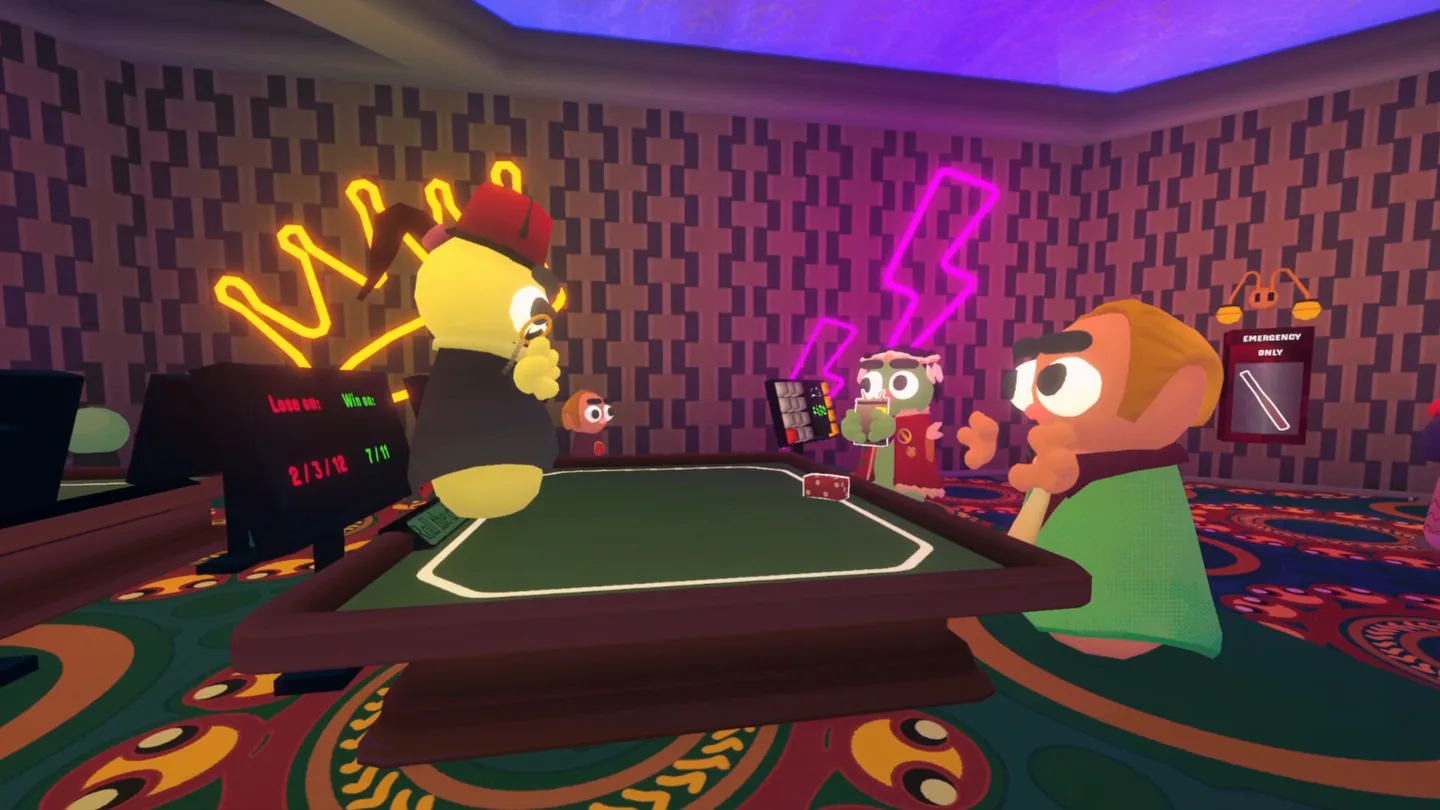
The official table scene is useful visual context for the game’s casino-crawler setting, but it should not be read as proof of a particular solo route. Use the checklist as a repeatable habit, then adjust it when a patch changes the current build.
- Start with one clear learning goal, such as understanding a table, floor, item, or timer rhythm.
- Say the current bank and target out loud before committing to a high-variance attempt.
- Avoid spending the entire bank on the first interesting option; keep a recovery margin.
- Use one item only when you can name the decision it is meant to improve.
- Pause after a loss instead of immediately doubling down to repair the feeling of the run.
- Leave when the target is secure unless the session’s stated purpose is deliberate practice.
Risk Without a Second Voice
How to make solo risk and exit calls
In co-op, a player can notice a bad idea before the host commits. Solo removes that check, so create a small substitute: name the reason, the amount at risk, and the point where you stop. If you cannot explain what the next gamble improves, it is probably momentum rather than a plan.
The editorial concept image beside this section is an explanatory illustration, not an official game screenshot. Its paths represent a useful mental model: protect a stable bank, choose a deliberate risk, and keep an exit route visible instead of chasing a dramatic final attempt.
- Reason: what specific problem does this next attempt solve?
- Stake: what part of the bank can the run afford to lose?
- Signal: what result means you stop, reset, or change tables?
- Timer: how much time remains for a recovery plan?
- Exit: what exact state counts as a successful session?
- Review: what one decision should change before the next run?

Where Solo Stops Helping
What a solo run cannot replace
Solo play answers the question “can I start and learn alone?” It does not answer the separate questions about hosting friends, proximity voice chat, lobby troubleshooting, or how a group divides decisions.
Social coordination
A solo session cannot teach the short callouts, disagreement handling, or shared-bank communication that make a full co-op lobby work.
Invite and lobby setup
If you need to host, invite up to five friends, or fix a join problem, use the dedicated multiplayer guide instead of stretching this page.
Item teamwork
Solo is good for learning what an item appears to do; co-op is where timing an item around another player’s decision becomes meaningful.
Shared discovery
A group can spot routes, jokes, and surprises that one player may miss. Treat solo as one learning mode, not the complete game experience.
Avoidable Errors
Common solo mistakes and safer corrections
Most solo failures are not caused by lacking a secret trick. They come from losing track of the bank, changing goals mid-run, or treating one unlucky result as a reason to take a larger risk.
| Mistake | Why it hurts | Better correction |
|---|---|---|
| Playing every table immediately | You learn less and expose the bank to several unknowns at once. | Choose one learning target and keep a reserve. |
| Buying an item after the bank collapses | The purchase cannot repair a decision that already removed your options. | Name the item’s job before the important gamble. |
| Chasing a loss | A bad result turns into a new goal without a clear reason. | Pause, restate the target, and accept a reset when needed. |
| Assuming solo means low pressure | The timer and quota still matter, while no teammate can share the call. | Track bank, target, timer, and exit state together. |
| Using a solo guide for lobby problems | The page intent is different from hosting or joining friends. | Switch to the multiplayer guide for invite and connection steps. |
Keep the Pages Distinct
Solo play vs multiplayer guide
These pages support one another without targeting the same question. Use the solo page for viability and solo decision-making; use the multiplayer page for the group session itself.
| Search need | Best page | Why |
|---|---|---|
| Can I play alone? | This solo guide | Answers player-count interpretation, solo expectations, and solo habits. |
| How do I invite friends? | Multiplayer guide | Covers host flow, invitations, lobby setup, and join problems. |
| How do I survive the first run? | Beginner guide | Covers quota, roles, item timing, and first-run mistakes. |
| How should I use bought items? | Items guide | Covers item jobs, timing, priorities, and combinations. |
Solo Play FAQ
Questions players ask before starting alone
First-Party Check
Verify current player details on Steam
The player-count answer and store-feature wording can change. Check the first-party listing before buying, installing, or relying on a remembered menu label.