Co-op Game Discovery
Friend Slop Games: What Friendslop Means and Why Gamble With Your Friends Fits
Friend slop games, also called friendslop games, are easy-to-start co-op experiences where shared decisions, short sessions, and funny mistakes matter more than perfect play. This guide explains the meaning, examples, and practical checks for choosing the best friendslop game for your group.
The Short Answer
A friend slop game is an informal discovery label, not an official genre. It usually describes a multiplayer game that is easy to explain, socially chaotic, and more memorable because friends share the mistakes. Gamble With Your Friends fits the pattern through online co-op, shared money, chance games, strange items, quota pressure, and the recurring choice between cashing out or pushing deeper. The phrase does not mean real-money gambling, and friendslop is simply the common no-space variant.
Gamble With Your Friends fits the idea because it combines online co-op, shared money, chance games, strange items, quota pressure, and fast arguments about whether the team should cash out or push deeper. It is not a real-money gambling recommendation; it is a videogame example of the friend slop pattern.
Meaning
What Does Friend Slop Mean for Games?
Friend slop describes games where the entertainment comes from the group dynamic as much as the mechanics. The game may have janky moments, risky systems, silly physics, unreliable plans, or a pressure timer, but the key feature is that the chaos becomes social rather than frustrating.
The phrase is often used for co-op or party-adjacent games that are easy to start and hard to execute cleanly. A good friend slop game creates stories: one player makes a greedy call, another wastes a tool, someone saves the run, and the group argues in a way that is fun instead of toxic.
| Term | What it usually means | What it does not mean |
|---|---|---|
| Friend slop game | A chaotic multiplayer game that is funniest with a group | A formal Steam genre or quality score |
| Friendslop | A compact spelling of the same search idea | A specific official franchise |
| Best friend slop games | A search for recommendations that work in a lobby | Only free games or only horror games |
| Friendlike | A related way to describe socially driven co-op discovery | A replacement for normal genre labels |
Selection Criteria
What Makes a Good Friend Slop Game?
The best picks are not just random or loud. They give the group enough structure to make decisions and enough uncertainty to create stories.
Fast onboarding
Players should understand the basic objective within minutes, even if mastering the systems takes longer.
Shared consequences
The funniest failures happen when one decision affects the whole group, such as shared money, shared health, shared quota, or shared escape timing.
Readable chaos
Bad outcomes should be understandable after the fact. If nobody knows why the group failed, the chaos becomes noise.
Short recovery loop
A wipe or failed run should lead quickly into another attempt, not a long punishment screen or a tedious reset.
Voice-friendly decisions
The game should reward short callouts, debates, jokes, and panic decisions without requiring perfect competitive comms.
Safe official access
Use official store pages, developer channels, or trusted platform listings instead of unofficial downloads or repacks.
Example
Why Gamble With Your Friends Works as Friend Slop
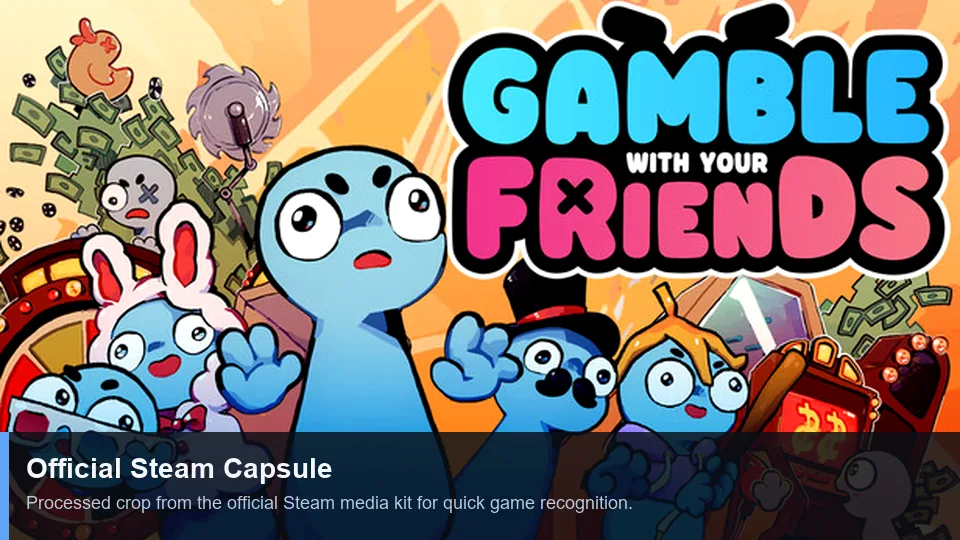
Gamble With Your Friends is especially relevant because the title already signals the social hook. Official Steam information describes an online co-op casino crawler for 1-6 players with shared money, many games of chance, items, casino floors, and a short quota. Those ingredients are exactly what friend slop searchers usually want: a simple premise that becomes unstable once real friends start making decisions.
The important distinction is intent. A beginner looking for a complete walkthrough should use the dedicated Gamble With Your Friends guide. A player searching for friend slop games is asking a broader discovery question: will this game create funny group failure, fast arguments, and replayable chaos?
- Shared bank means one bad gamble can become a group problem.
- Quota pressure gives every run a clear decision point.
- Ticket items create funny but risky debates about spending.
- Short co-op sessions are easy to pitch to a friend group.
- Official Steam media and listing details should be checked before buying.
Choosing Guide
How to Pick the Right Friend Slop Game for Tonight
A good choice depends on who is in the voice call, how much time you have, and whether the group wants discovery or reliable wins.
Start with session length
If the group has less than an hour, choose a game with quick onboarding and short failed-run recovery. Gamble With Your Friends works best when the group can learn by repeating runs.
Decide how much blame is fun
Some groups love shared-bank chaos; others get tilted when one player ruins the plan. Pick games where failure will become a story, not a fight.
Check platform and player count
Do not assume every friend can join. Verify Steam availability, player count, controller needs, language support, and current release status on official sources.
Prefer clear objectives
The best chaotic games still have an obvious goal: hit quota, escape, deliver items, survive a night, or finish a task under pressure.
Keep one serious player from over-managing
Friend slop loses its charm if one person turns every mistake into coaching. Let the first session be exploratory, then optimize later.
Official Source
Check Steam Before You Buy or Install
Use the official Steam listing to confirm the real game, current availability, and co-op details before buying or installing.
FAQ