Duck Race Strategy
Gamble With Your Friends Duck Race Guide: Rules, Bets, and Team Strategy
Duck Race is easy to understand and dangerous to overplay. Pick a duck, agree on a stake before the race starts, and protect the shared bank instead of turning one fast result into a chain of recovery bets.
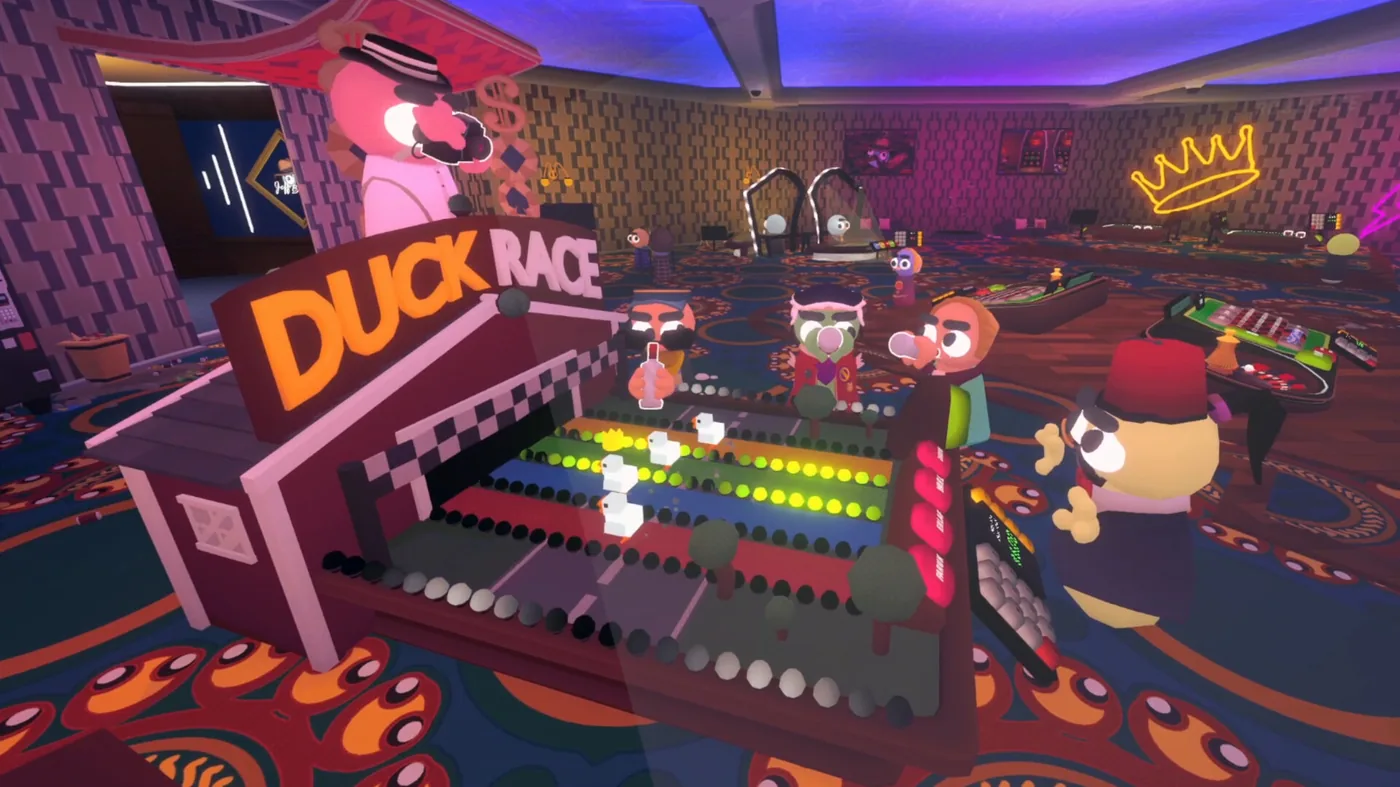
The short answer: treat Duck Race as a capped side bet
In Gamble With Your Friends Duck Race, the useful decision is not finding a guaranteed winning duck. The result is a luck-driven race, so the team advantage comes from stake control, timing, and a clear stop rule. Choose the amount first, nominate one person to place the bet, and decide whether the team leaves after one result.
Duck Race fits best when the shared bank can absorb the loss and the group wants a fast, readable gamble. It is a poor recovery tool when quota money is already in danger. A quick game can still erase a run if several friends place uncoordinated bets or chase the duck that nearly won last time.
- Set a maximum loss before choosing a duck.
- Use one agreed team bet instead of overlapping recovery bets.
- Do not treat a close finish as evidence that the same duck is now safer.
- Stop when the bank reaches the amount needed for quota or the planned exit.
How It Works
How to play Duck Race in Gamble With Your Friends
The table presents a set of ducks and a short race. You choose the entry you want to back, commit the stake, and then watch the automatic result. Unlike blackjack, there is no hit-or-stand decision after the race begins. That makes the pre-race bank decision the main skill layer.
The exact presentation, payouts, or balance can change with patches. Read the live table before confirming a wager and use the official Steam page and in-game text as the current source when a guide or old video disagrees.
Check the shared bank
Say how much money is available, how much must remain for quota, and whether another player is already spending elsewhere.
Set the stake ceiling
Choose the maximum acceptable loss before looking for a favorite. This prevents the excitement of the table from deciding the size.
Pick one duck
Use the information visible on the current table, but do not invent a hidden pattern from color, lane, or the previous winner.
Watch without adding risk
Once the race starts, the decision is committed. Use the time to prepare the next team call rather than arguing about luck.
Resolve and stop
After the result, update the bank and follow the stop rule. A win does not require another race, and a loss does not create a debt that must be recovered here.
Read the Table
Duck Race odds: useful information versus gambler's fallacy
A visible board can help you understand which duck you are selecting and what the current wager offers. It cannot prove that a duck is due because it lost earlier, or that a recent winner has become permanently stronger. Treat every new race as a new decision unless the live game explicitly displays persistent modifiers.
The safest approach is to separate facts shown by the current table from stories the group creates after a dramatic finish. A close second place feels informative, but it does not repay the shared bank.
| Signal | What it means | Decision |
|---|---|---|
| Current displayed payout or table information | Live information for this wager | Use it before confirming the stake |
| A duck won the previous race | A memorable past result | Do not raise the bet only because it just won |
| A duck nearly won | A close animation or finish | Do not treat the near miss as stored progress |
| The team is below quota | The run has a money problem | Prefer a planned recovery route, not repeated race bets |
| The team is safely above quota | The required money is protected | Only play if the bonus-risk budget was agreed in advance |
Bankroll Plan
A Duck Race bet plan that protects the run
Use a three-number call before betting: current bank, protected amount, and Duck Race budget. For example, if the team has 140, needs 100 to stay safe, and agrees that only 10 can be risked here, the remaining 30 is not automatically available for a chase. It belongs to the rest of the route unless the team changes the plan together.
A one-race plan is usually easier to control than a win-until-loss or double-after-loss system. Doubling feels organized, but it increases exposure exactly when the bank is shrinking. The race is too random to turn a larger next stake into certainty.
- Protect quota money first.
- Cap the table budget as a fixed amount, not a percentage that keeps changing.
- Allow only one recovery decision after a loss, and prefer zero when the timer is tight.
- Bank a useful win instead of converting it into permission for a bigger bet.
- Leave immediately if the group cannot agree who controls the next stake.


Co-op Discipline
Short team callouts prevent expensive Duck Race chaos
Duck Race becomes dangerous when every player reads the same fast table as permission to act independently. The shared bank means one person's harmless-looking side bet can cancel another player's route plan. Use short callouts that include a number and an exit condition.
A designated caller is not a boss and does not need to choose the duck. Their job is to confirm the bank, repeat the cap, and say whether the race ends the table visit. This leaves the fun choice to the group while keeping the financial boundary clear.
- Bank 140, protect 100, race budget 10.
- One bet only; no one else spends until the result.
- If it wins, we bank it and move.
- If it loses, we leave and use the planned route.
- Quota is safe; this is optional entertainment, not required progress.
Avoid These
Common Duck Race mistakes
Most Duck Race losses become run losses because the team changes the stake plan after seeing an emotional result.
| Mistake | Why it fails | Better habit |
|---|---|---|
| Chasing the duck that almost won | A near miss feels like progress even though the next race is a new event. | Reset the decision after every result. |
| Doubling after every loss | The exposure grows while the shared bank becomes less able to absorb it. | Use a fixed cap and leave when it is spent. |
| Letting several friends bet at once | The team cannot see its real remaining budget until too late. | Pause all other spending during the race. |
| Playing with quota money | A side game becomes the reason the required route fails. | Ring-fence the amount needed to continue. |
| Assuming an old video proves current odds | Payouts and behavior may change after updates. | Read the live table and current patch information. |
| Turning an achievement attempt into a normal run | Special goals can justify risk that would be bad for survival. | Label the session before spending and keep cleanup separate. |
Achievement Boundary
Plan Duck Race achievement attempts separately
Community trackers and guides may list Duck Race-related achievements, but the live Steam achievement list is the source to check before a cleanup run. Requirements can be misunderstood, renamed, or changed after patches. Confirm the exact goal first, then decide how much of the session is allowed to serve that achievement rather than quota survival.
If the target needs repeated wins, a specific payout, or another unusual condition, tell the group before the run begins. Do not quietly convert shared progress money into an achievement budget. Use the full achievements guide for route order, hidden-goal cleanup, and separating special attempts from normal co-op runs.
Quick Answers
Gamble With Your Friends Duck Race FAQ
How do you play Duck Race in Gamble With Your Friends?
Choose a duck at the table, confirm the wager, and watch the automatic race. The main strategic decisions are the stake size, the protected bank amount, and whether the team stops after the result.
Is there a guaranteed best duck or lane?
This guide found no reliable basis for a guaranteed duck or fixed best lane. Use current table information, but do not treat color, a near miss, or the previous winner as proof of the next result.
Should I double the bet after a loss?
Usually no. Doubling increases exposure while the shared bank is already smaller. A fixed table budget and a clear stop point are safer for completing the run.
Is Duck Race good for recovering quota money?
It can produce a fast result, but luck-driven speed does not make it a reliable recovery plan. Use it only when the team has capped the loss and can survive the failed bet.
Does Duck Race have achievements?
Current community trackers mention Duck Race-related goals, but check the live Steam achievement list for exact names and requirements. Use the achievements guide to plan repeated or special-condition attempts.
Can you save-scum Duck Race?
Some third-party guides discuss save manipulation, but that behavior may change, can undermine the intended run, and is not required for this strategy. This page focuses on normal shared-bank play and verifiable live rules.
When should the team stop playing Duck Race?
Stop when the planned race budget is spent, quota money would be exposed, the timer makes another race costly, or the team cannot agree on one stake and exit rule.
Sources Checked
Official and current-reference boundaries
The official store is used for current media and product facts. Third-party guides are directional only when explaining player questions or achievement discussions.
- Official Gamble With Your Friends Steam page — official screenshots, updates, features, and live store information
- Steam Community guides — community strategies that may change with patches