Push-your-luck game guide
Gamble With Your Friends Dragon Tower Guide: Risk, Cash-Out, and Team Calls
Dragon Tower rewards a clear stop rule more than a dramatic final climb. This guide explains how to read the tower, separate optional money from quota money, and decide whether the next step is worth the run's time and risk.

How should you play Dragon Tower in Gamble With Your Friends?
Treat Dragon Tower as a push-your-luck decision, not as a reliable multiplier or a guaranteed way to repair a run. The useful question is not whether the next step looks exciting; it is whether the team can afford the loss if that step fails. Read the current in-game prompt and payout display before committing because public guides and balance values can lag behind a patch.
Before the first climb, divide the shared bank into protected quota money, route money, and optional Dragon Tower money. Only the last group should be exposed. Agree on a maximum number of steps or a cash-out threshold before the outcome becomes emotional. Once the tower reaches that boundary, leave even if the team feels one move away from a bigger reward.
The dedicated page exists because the all-games directory identifies Dragon Tower but does not answer the next-step decision. It also keeps Dragon Tower separate from the broad best-games guide: this page explains one push-your-luck machine, while the broader guide decides which game fits the whole run.
Read the state first
Dragon Tower sequence: climb, assess, and stop
Exact labels, rewards, and failure behavior belong to the current build. Use this sequence as a decision framework rather than a promise that a particular step or multiplier will always appear.
Confirm the starting state
Read the machine's current prompt and check whether the team is entering a fresh tower, resuming a choice, or looking at a result. Do not rely on a clip from an older patch to describe the current screen.
Name the available risk
The caller should state what the next step can gain and what the team can lose. If the group cannot describe the downside in one sentence, pause and keep the reserve untouched.
Set the boundary before climbing
Choose a maximum step, a cash-out point, or a fixed number of attempts. Write the rule in voice chat or say it aloud so the plan survives the excitement of a near miss.
Re-check the run after each result
After a success, compare the new total with quota, timer, floor position, and the cost of another attempt. A larger visible reward does not automatically mean the next risk is affordable.
Cash out or reset cleanly
When the pre-set boundary is reached, finish the choice and leave. If the tower fails, treat the loss as the end of that attempt rather than an instruction to double the next stake.
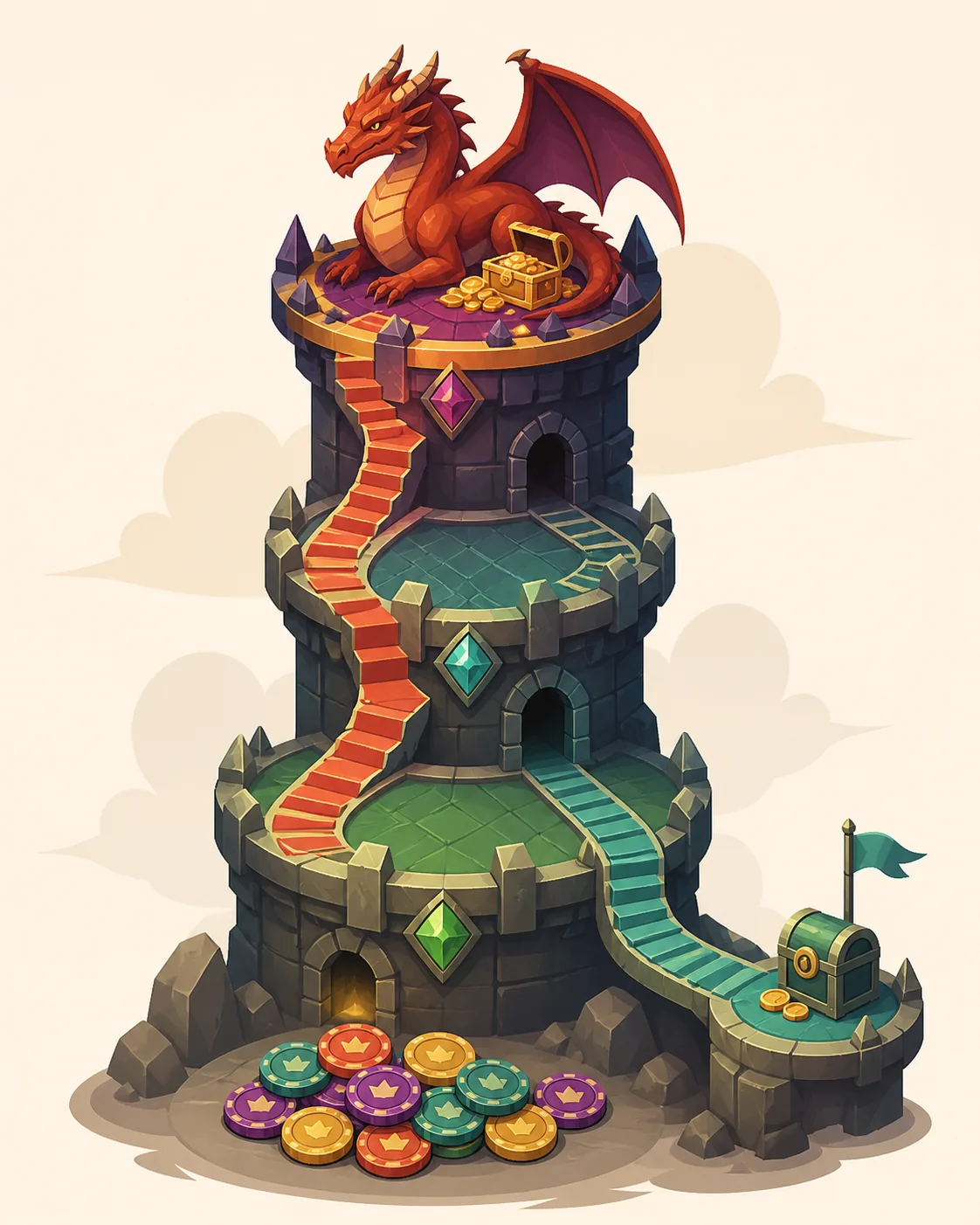
Bankroll and route fit
When is the next Dragon Tower step worth taking?
A good Dragon Tower decision combines four variables: the protected reserve, the quota gap, the remaining timer, and the cost of leaving the current floor position. A team that is already safe can stop earlier. A team that is short on quota may accept a controlled attempt, but it should not turn that shortage into unlimited recovery betting.
Use the table below as a fast callout. It is intentionally conservative because the game does not let a player control the underlying outcome. The goal is to make the decision repeatable across runs, not to invent a universal best multiplier.
Keep the generic phrase “Dragon Tower multiplier” out of the page's promise. Similarweb shows demand for that wording, but it is also used by unrelated gambling and casino pages. The brand-qualified game context is the safer boundary for this wiki.
| Run state | What to do | Why |
|---|---|---|
| Quota is already safe | Prefer the pre-set cash-out | An extra step adds downside without solving a problem |
| Quota is slightly short | Allow one defined attempt | A capped risk can fit the route; open-ended chasing cannot |
| Timer is nearly gone | Leave or choose the fastest safe option | A long tower choice can cost the next objective |
| Reserve is exposed | Stop the tower and protect the bank | Quota money should not become a second stake |
| The team disagrees | Pause and let the caller restate the rule | Conflicting inputs create avoidable losses |
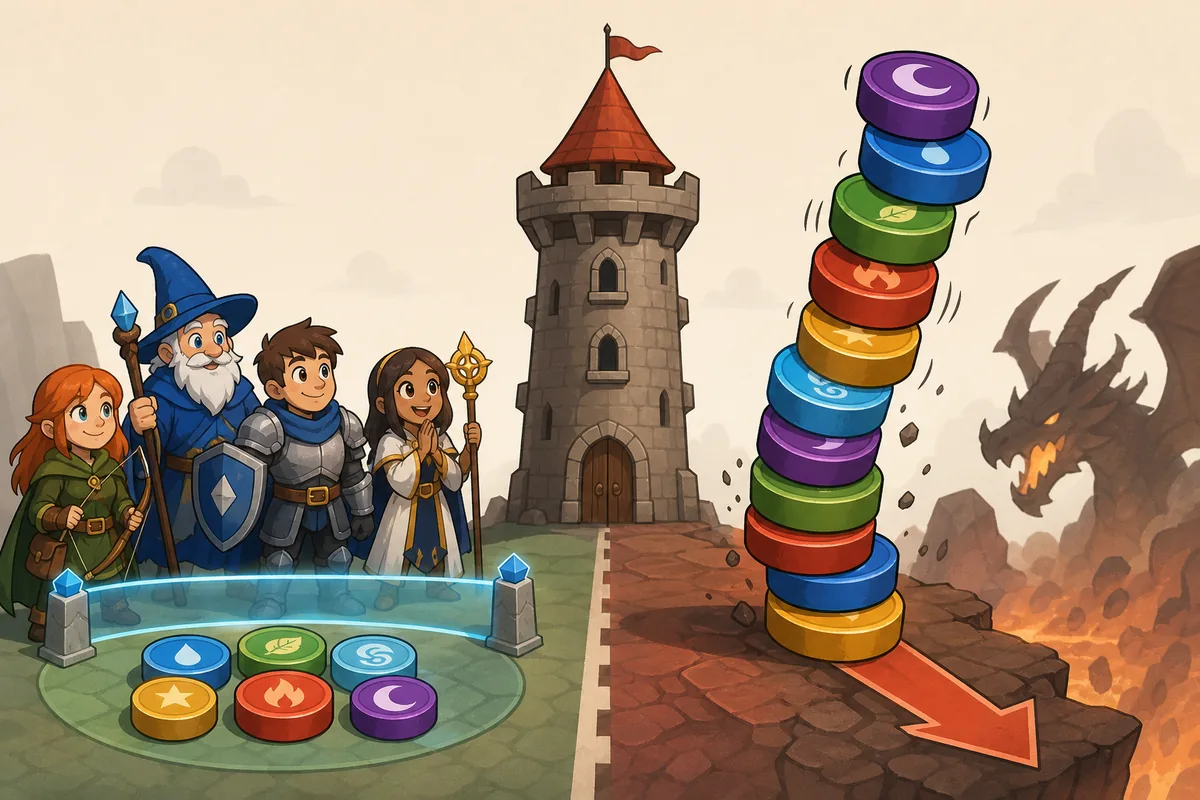
Co-op communication
Four useful Dragon Tower team roles
Roles can rotate between rounds, but someone should own each responsibility before the next step is selected.
Caller
Reads the current state, repeats the agreed boundary, and gives the final climb or cash-out call. The caller should not change the rule halfway through a sentence.
Reserve keeper
Tracks quota money and optional money separately. This player can veto a stake that would make the planned route impossible after a failure.
Timer watcher
Monitors the run clock and floor objective. A technically attractive tower choice is still wrong if it costs the team the next required action.
Result reader
Confirms what the game actually displayed after a step. This prevents the team from remembering a near miss as a win or importing a rule from another machine.
Avoidable losses
Common Dragon Tower mistakes and better responses
| Mistake | Why it hurts | Better response |
|---|---|---|
| Climbing without a boundary | Every result moves the stop rule farther away | Choose the cash-out or attempt cap before the first step |
| Using quota money | A single failure can damage the whole route | Separate protected and optional money before entering |
| Chasing after a failed tower | The next attempt is not more likely because the last one failed | Close the attempt and reassess the run state |
| Copying real-world gambling systems | The game balance and interface are different, and no system guarantees a result | Use current in-game labels and a simple exposure limit |
| Multiple players clicking | The team loses track of which choice was confirmed | Give control to one caller and one designated input player |
Common questions
Gamble With Your Friends Dragon Tower FAQ
What is Dragon Tower in Gamble With Your Friends?
Dragon Tower is a game-floor push-your-luck activity listed in the current all-games directory. The exact prompts, rewards, and failure details should be checked in the build you are playing.
Is there a guaranteed Dragon Tower multiplier?
No. A visible multiplier or higher reward does not guarantee the next result. Use the brand-qualified game guide for decision planning, not for a sure-win claim.
Should I always climb as high as possible?
No. Stop when the pre-set cash-out, quota, timer, or reserve rule says to stop. A smaller secured result can be better for the whole run than a larger but unprotected attempt.
How much money should the team risk in Dragon Tower?
Only optional money that the run can lose without threatening quota, the next objective, or an emergency route. Set the amount before the machine choice becomes exciting.
Does the Dragon Tower guide show the exact current payouts?
No. Public descriptions and balance values can change after updates. Read the current in-game display and treat this page as a risk-and-coordination guide.
Where can I see every Gamble With Your Friends game?
Use the full games guide for the 17-game directory, then return here when the decision is specifically about Dragon Tower's push-your-luck sequence.
Source boundaries
Official and community references
Checked August 1, 2026. The official Steam page and public game references support the game's identity and game-floor context. They do not document every Dragon Tower prompt or payout, so the current installed build remains the authority for exact mechanics.
Continue planning
Related Gamble With Your Friends guides
All games guide
Find Dragon Tower in the verified 17-game directory and compare its decision type with other machines.
Best games strategy
Choose a game by quota, timer, shared-bank health, and the team's current risk tolerance.
Items guide
Review item timing and ticket priorities before committing optional money to a tower attempt.
Floors guide
Fit the tower decision into floor pacing, hazards, and the route's next objective.